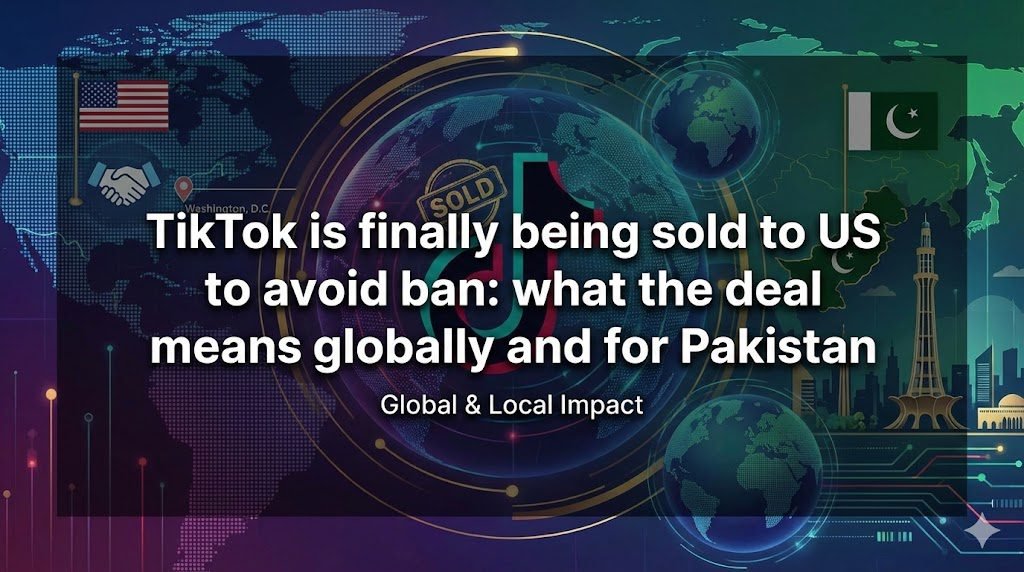
The development that TikTok is finally being sold to US to avoid ban has moved a long-running geopolitical and technology dispute into a decisive phase. For years, TikTok’s ownership structure placed it at the center of national security debates in the United States, while regulators questioned how user data is stored, accessed, and governed. The proposed sale is not just a corporate transaction; it is a restructuring of control over one of the world’s most influential digital platforms.
For Pakistan, where TikTok has become a major driver of digital expression, income generation, and online culture, the outcome of this deal matters far beyond headlines. It affects creators, advertisers, policymakers, and millions of daily users who rely on the platform as part of their digital routine.
Why TikTok faced a potential ban in the US
TikTok’s challenges in the United States stem from concerns raised by lawmakers and security agencies about data governance and foreign ownership. The platform is owned by ByteDance, a China-based company, which placed it under scrutiny during a period of heightened geopolitical tension.
The core concerns repeatedly raised included:
- Where US user data is stored and processed
- Whether foreign ownership could allow indirect access to sensitive data
- The influence of foreign governance structures on content moderation
These concerns did not automatically prove misuse, but they triggered a regulatory response that forced TikTok to consider structural changes to maintain access to the US market.
What “being sold to the US” actually means
The phrase TikTok is finally being sold to US to avoid ban does not imply that the US government is purchasing the platform. Instead, it refers to a restructuring in which TikTok’s US operations and control are transferred to an American-owned or American-controlled entity.
Such a deal typically includes:
- Transfer of majority ownership to US-based investors
- Governance restructuring under US corporate law
- Data handling frameworks that fall under US regulatory oversight
- Clear separation from foreign parent company control
The goal is to align the platform with US legal and security expectations while allowing TikTok to continue operating.
Why the US market matters so much to TikTok
The United States is one of TikTok’s largest and most profitable markets. Losing access would not only reduce revenue but also weaken TikTok’s global influence.
US-based creators shape:
- Global content trends
- Advertising strategies
- Platform features and monetization models
A ban would have disrupted the entire ecosystem. From TikTok’s perspective, selling or restructuring operations was a strategic decision to preserve long-term viability.
Regulatory pressure as a forcing mechanism
This situation demonstrates how regulatory pressure can reshape global technology companies. Rather than shutting platforms down outright, governments increasingly use compliance frameworks to force alignment with national priorities.
In this case, the threat of a ban functioned as a forcing mechanism. TikTok had to choose between:
- Exiting the US market
- Accepting ownership and governance changes
The sale option allowed continuity while addressing regulatory demands.
What changes users may notice after the sale
For everyday users, the platform is expected to look largely the same. The algorithm, interface, and creator tools are unlikely to change immediately.
However, behind the scenes, several shifts may occur:
- Data storage and access protocols become more localized
- Corporate governance reports align with US compliance standards
- Content moderation policies may face closer scrutiny
These changes aim to satisfy regulators rather than alter user experience.
Impact on global digital platforms
TikTok’s sale sets a precedent for how countries handle foreign-owned digital platforms. It signals that:
- Market access may require local ownership or control
- Data governance is now a central policy issue
- Technology companies must adapt to regional legal frameworks
Other platforms operating across borders are closely watching this outcome.
Why Pakistan should pay attention
Pakistan has one of TikTok’s largest user bases. The platform is deeply embedded in:
- Youth culture
- Small business marketing
- Influencer-driven advertising
- Digital entertainment
While the sale is a US-specific regulatory response, its ripple effects will reach global markets, including Pakistan.
Key areas of relevance include:
- Platform stability and continuity
- Monetization frameworks influenced by US policies
- Content moderation standards that often roll out globally
Pakistan-based creators often benefit from changes introduced first in the US market.
Creator economy implications in Pakistan
TikTok has enabled many Pakistani users to generate income through:
- Brand collaborations
- Live gifting features
- Cross-platform promotion
If TikTok had been banned in the US, advertising revenue and platform investment would likely have declined globally. The sale reduces that risk by stabilizing TikTok’s future.
A more secure ownership structure may:
- Encourage brands to continue investing
- Expand monetization programs
- Improve long-term platform planning
For Pakistani creators, stability matters more than ownership headlines.
Advertising and business use of TikTok
Businesses in Pakistan increasingly use TikTok for:
- Product promotion
- Service awareness
- Local brand storytelling
Advertisers track global regulatory signals. When a platform appears unstable, ad budgets shift elsewhere. The sale helps restore confidence, which benefits markets outside the US as well.
Data governance lessons for Pakistan
The TikTok case highlights a broader lesson: data governance is becoming a core issue in digital policy worldwide.
Pakistan’s digital ecosystem will eventually face similar questions:
- Where is user data stored
- Who has access
- What legal protections exist
Watching how the US structures TikTok’s compliance offers insight into how future regulations may develop locally.
Comparing TikTok’s case with other tech disputes
This is not the first time a technology platform has faced regulatory restructuring. Similar patterns have appeared in:
- Telecom licensing
- Financial technology compliance
- Data localization requirements
What makes TikTok unique is its cultural influence and speed of adoption. Regulatory actions affecting TikTok are not limited to business circles; they affect everyday users.
Misinformation risks and clarity
Viral headlines often oversimplify complex transactions. It is important to separate facts from speculation:
- TikTok is not shutting down
- Users are not losing accounts
- Content libraries are not being erased
The core change is ownership and governance, not functionality.
Long-term outlook for TikTok after the sale
If executed properly, the sale may strengthen TikTok’s position by:
- Reducing regulatory uncertainty
- Encouraging long-term investment
- Allowing clearer compliance planning
However, it also means closer oversight and less operational ambiguity.
Digital platforms and national sovereignty
The case reinforces a global trend: countries increasingly view digital platforms as part of national infrastructure. Control, data access, and governance are treated with the same seriousness as physical assets.
This shift will shape how platforms operate across borders in the coming decade.
Relevance to data-driven platforms in Pakistan
AI-driven and data-driven platforms in Pakistan are also affected by global regulatory norms. Trust, verification, and transparency increasingly influence adoption.
In real estate, for example, platforms like Property AI apply structured data usage within local regulatory environments, demonstrating how technology can align with national frameworks rather than conflict with them.
What users should realistically expect
For Pakistani users, the practical takeaways are straightforward:
- The app will continue functioning normally
- Creator opportunities remain intact
- Platform investment appears more secure
Ownership changes do not directly affect user behavior, but they shape long-term platform health.
Broader implications for social media governance
The sale underscores that:
- Social media is no longer regulation-light
- Governments will intervene when data control is unclear
- Platforms must balance innovation with compliance
This balance will define the next phase of global digital platforms.
FAQs
Is TikTok shutting down in Pakistan because of this sale?
No. The sale is specific to US regulatory requirements and does not affect TikTok’s availability in Pakistan.
Why did the US push for TikTok’s sale?
Concerns centered on data governance, ownership structure, and national security considerations.
Will TikTok’s algorithm change after the sale?
No immediate algorithm changes are expected. Any adjustments would be gradual and compliance-driven.
Does this sale affect Pakistani creators’ earnings?
The sale reduces uncertainty, which supports continued advertiser confidence and creator monetization.
Can other countries force similar sales?
Countries may adopt different regulatory approaches, but this case sets an important reference point.
Disclaimer
This information is for awareness only and is subject to change. Readers should independently verify regulatory details, corporate disclosures, and policy decisions from official sources.